My name is Kyle Beyersdorf. I am a doctoral student in the Learning Sciences PhD program at Indiana University (IU). I am committed to excellence in research, teaching, and service. Each is grounded by my guiding focus: improve teaching and learning in higher education in ways that prepare graduates to solve the serious policy problems facing our society.
Hello!


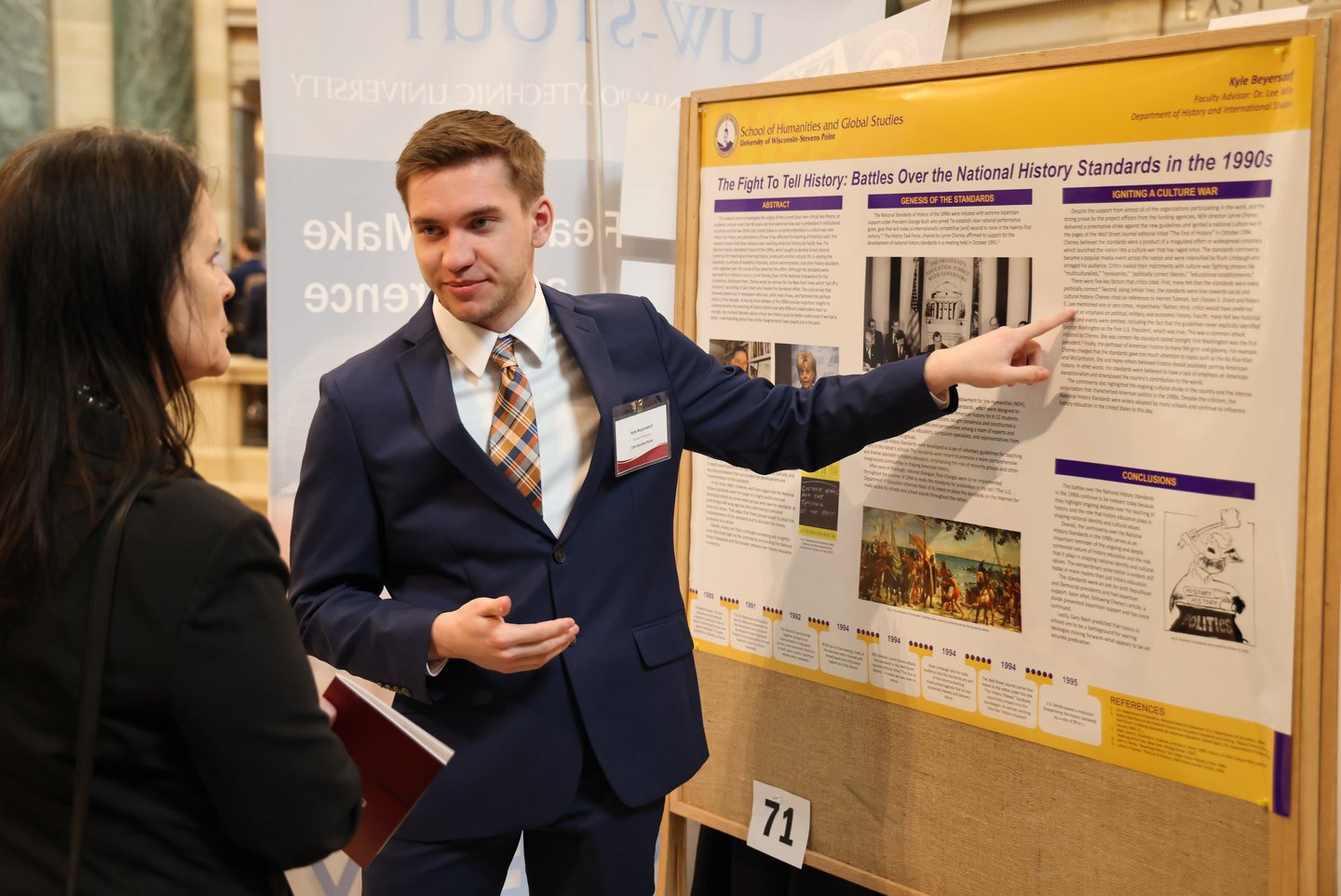
RESEARCH
Visit my Research page to explore my scholarly work on teaching and learning in higher education, with particular attention to multidisciplinary approaches and social issues.
A COMMITMENT TO RESEARCH, TEACHING, & SERVICE
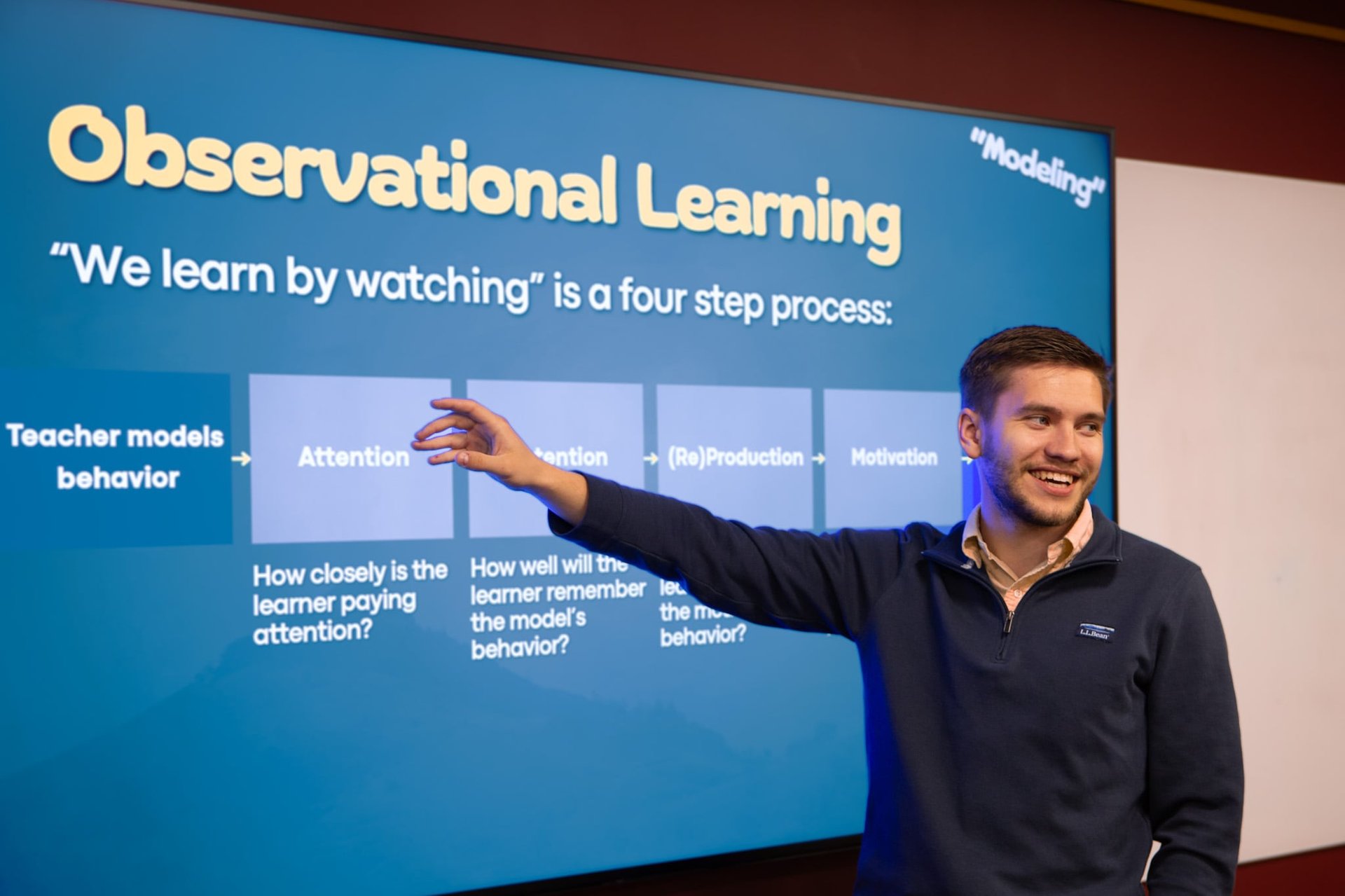
TEACHING
Visit my Teaching page to learn more about my instructional philosophy, course design, and approaches to supporting meaningful student learning.
SERVICE
Visit my Service page to see how I contribute to internal and external academic communities through leadership, collaboration, and professional engagement.
ARTIFACTS TO VIEW
CANDIDATE STATEMENT
My name is Kyle Beyersdorf and I am a learning scientist in higher education. I am currently in the Learning Sciences PhD program at Indiana University Bloomington, under the supervision of Dr. Daniel T. Hickey. As a scholar, I am committed to excellence in research, teaching, and service, all of which is grounded by my guiding focus: improve teaching and learning in higher education in ways that prepare graduates to solve the serious policy problems facing our society.
I center interdisciplinary learning as the core phenomenon of my research identity given that contemporary societal problems exceed the explanatory capacity of any one discipline. Colleges and universities often position interdisciplinarity as a central response to this complexity, yet remain structurally organized disciplines. The learning sciences have also made interdisciplinarity a core scholarly focus leading to special issues (see Markauskaite et al., 2024), books (see Shanahan et al., 2022), and a multitude of studies. I look to advance this research direction.
To do so, I study faculty practices as they relate to interdisciplinary research and teaching. Mainly because I acknowledge that faculty are positioned to put into practice interdisciplinarity and must be supported to do so. However, to best support faculty, empirical research must be undertaken to identify opportunities for growth and barriers to overcome. This work coincides with an ecological view of student learning that I embrace. This view is consistent with learning sciences literature (e.g., Kali, 2024; Markauskaite et al., 2023, 2024) which points to individuals, groups, curriculum, activity, systems, and institutional arrangements as factors that warrant meaningful investigation.
I have been fortunate to have many opportunities to meaningfully contribute to research during my doctoral education. Contributing to both the National Survey of Student Engagement (NSSE) and Faculty Survey of Student Engagement (FSSE), both of which are extremely prominent national surveys in postsecondary education, has been invaluable in supporting my contextual focus of higher education. I was directly involved in drafting survey items that would appear on both surveys, particularly on questions focused on asking students and educators about generative artificial intelligence. Much of my research on faculty practices and interdisciplinary comes from NSSE and FSSE as representative samples of college faculty and students.
I was also selected as the first School of Education student ever selected to participate in the UNFCCC Conference of Parties (COP31) as an IU delegate. In November 2026, I will travel to Antalya, Türkiye, to conduct an ethnographic study to examine higher education's role in advancing global climate justice. This interdisciplinary experience will extend my broader scholarly and pedagogical commitment to bridging theory and practice, particularly in how learning and knowledge systems operate across institutional and global contexts. By situating myself within this global policy environment, I aim to better understand how educational institutions can more effectively prepare learners to navigate and shape urgent societal challenges.
In addition to research I have gained notable teaching experience. I instructed Learning Theories for Teachers, an in-person, 3-credit course from the fall 2025 semester through present day. The course is one of four required courses all IU School of Education undergraduate students in the Teacher Education program. I have so far interacted with 51 students from two semesters. In the fall of 2025, I also co-instructed Leveraging Artificial Intelligence for Learning and Life with Dr. Susan Drumm. This online, 8-week course was taken by students from numerous academic disciplines and productively challenged me to develop assignments that would uniquely benefit each student in respect to their own interests. I independently created three different assignments and was responsible for the facilitation and grading of each. I've since adapted some of these assignments into the Learning Theories for Teachers curriculum across sections.
In the future, I seek a faculty position in a School of Education, particularly within Learning Sciences, Higher Education, Curriculum and Instruction, Research Methodology, or another closely related field. I am especially interested in returning to Wisconsin, where my wife and I are both from. Professionally, I aim to contribute to an institution that values academic excellence from both its faculty and students, while also placing a great priority on the student experience. Second to faculty positions, I am open to roles in centers for teaching and learning, institutional research, or other university units with a strong focus on student learning. Teaching and supporting student learning remains central to my professional identity regardless of role.
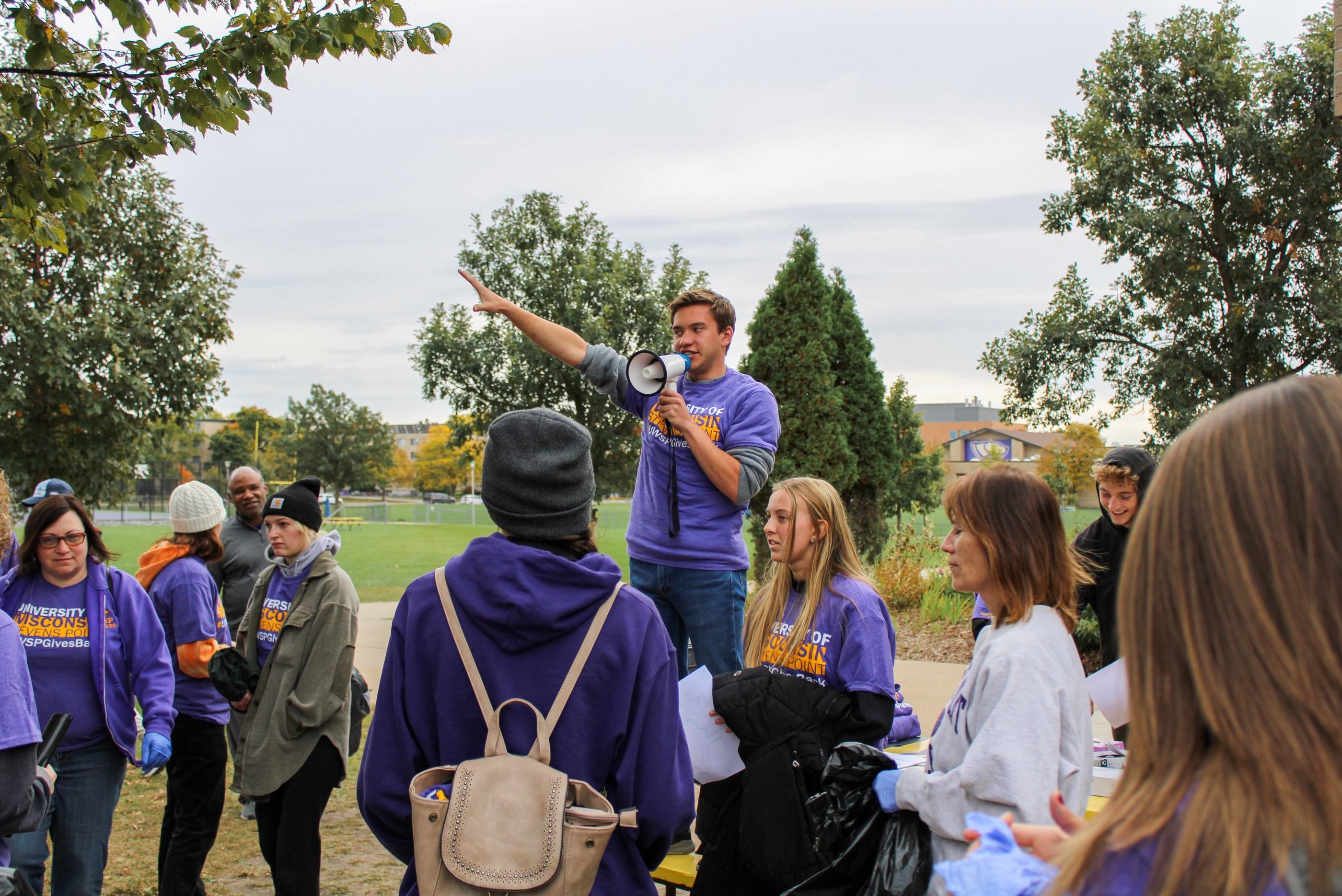
Finally, I'd like to explain my contextual focus of higher education. I became passionate about student learning as an undergraduate student at the University of Wisconsin-Stevens Point. My undergraduate experience was marked by consistent and meaningful campus leadership. In my final year at UWSP I served as the Student Body President and was able to deeply immerse myself among the pressing issues facing students, faculty, staff, administrators, and local government officials. I realized how much conversations geared towards campus success energized me even when they demanded complex thinking and navigating difficult tradeoffs. My childish excitement despite the uncertain terrain–which persists to this day, led me to believe that I knew this was what I wanted to do for the rest of my life. Committed to living a life committed to enhancing campus success, I found myself in Indiana University's Higher Education and Student Affairs (HESA) master's program. It was in the HESA program that I was more intimately exposed to the evolving landscape of higher education. I began to view the field of higher education as a scholar and saw a field grappling with declining enrollment, rising costs, systemic inequities, and increasing scrutiny over its quality and value. Invaluable experiences during my master's program in the Office of Residence Life, Office of Scholarships, School of Medicine, and more further exposed me to these realities. Despite these challenges I found student learning to be at the heart of the confluence of concerns. Student learning resonates across stakeholders, including students, families, employers, policymakers, and the broader public, which underpins my academic and professional pursuits. Consequently, in my master's program I took several courses in the Learning Sciences program. These courses made it clear to me that I was a learning scientist and led me to continue my education in the Learning Sciences PhD program to deepen my knowledge and advance my skills to maximize the impact I can have on student learning in higher education moving forward.
PEDAGOGICAL APPROACH & TEACHING PHILOSOPHY
I have taught preservice teachers in Learning Theories for Teachers (EDUC-I251/M101, fall 2025–present day), guided students in applying learning strategies with AI in Leveraging Artificial Intelligence for Learning and Life (EDUC-F401, fall 2025), and supported student leadership and identity development in Foundations of Residential Leadership (EDUC-U450, spring 2024). Across these courses, I have taught in both in-person and online formats, developed syllabi, designed applied learning activities, and provided timely, meaningful feedback using Canvas. Across these varied contexts, my central aim has remained consistent: to design learning environments in which students actively construct knowledge through engagement with ideas, with one another, and with authentic problems of practice.
To me, teaching is fundamentally relational. It is the work of cultivating trust, intellectual safety, and shared purpose. I believe these conditions encourage students to be more willing to engage deeply, take intellectual risks, and evolve their thinking. I often introduce on the first day of class that the course is a "roadtrip." I've adapted this from my experience as a student in Dr. Neil Prendergast’s course, which I found quite impactful. I frame the semester as a 36-hour roadtrip that we will take together–time we could theoretically spend traveling from Bloomington, Indiana, to Miami, Florida, and back. This framing is not simply an icebreaker; it foregrounds the importance of knowing who we are learning alongside. Like any long journey, the quality of the experience depends on the relationships among those sharing the space, and the extent to which mutual respect and shared purpose are established early. As one student reflected, “It’s very open and honest and I do look forward to coming to class.”
As for my pedagogical approach, my teaching is grounded in sociocultural traditions in learning theory (Vygotsky, 1962), which position knowledge as something constructed through interaction, experience, and meaningful engagement in a shared activity. I also place great emphasis on utility value (Eccles & Wigfield, 2020), viewing student motivation to be significantly shaped by perceptions of usefulness and relevance, not to mention contexts. Students consistently respond to this design orientation, particularly when learning is framed as connected to their future professional identities. One student noted, “I like how it all applied really well to my future career… all the activities were so well matched with what we were learning,” highlighting how perceived relevance supported sustained engagement.
Grounded in situated cognition (Brown et al., 1989), I embed learning experiences in authentic, practice-like contexts. In Learning Theories for Teachers, this includes "Workshops" in which students navigate professional dilemmas and tradeoffs, propose a field trip experience for grant funding, design a lesson plan for a substitute teacher, and more. Students consistently identify these applied structures as central to their learning, with one noting, “I like how many opportunities we get to apply what we are learning in class. I definitely learn more when I am applying, and it sticks with me more when I put it into practice.” My course coordinator, Dr. Susan Drumm, recognized this work and noted that "[I] design creative, interactive class activities to make the content relevant, and then freely shares his designs and experiences with the other [instructors]." Building on this orientation, I also integrate what I call "Learning Launch," in which students facilitate a brief instructional segment on a learning theory of their choosing. This practice positions students as both learners and teachers, requiring them to organize ideas, anticipate questions, and design learning experiences for their peers. As a result, students engage more deeply with readings, seek additional sources, and take ownership over the intellectual direction of the classroom. This reflects my belief that teaching is the best form of learning.
Extending learning beyond the classroom is another core principle of my pedagogy, grounded in experiential learning theory and communities of practice (Lave & Wenger, 1991). In Leveraging Artificial Intelligence for Learning and Life, students conducted interviews with professionals in their field of interest to understand how generative AI is reshaping contemporary work and learning environments. In Learning Theories for Teachers, students interview practicing K-12 educators and map instructional strategies to theoretical frameworks studied in class. These experiences are complemented by guest practitioners who bring lived professional expertise into the classroom, including my father-in-law. One student reflected on such an experience, “This was genuinely so cool and special… definitely my favorite day of class as an education major ever,” underscoring the power of connecting theory to practice.
My development as an educator has been intentional and ongoing. I have earned graduate certificates in College Pedagogy and in Learning Sciences, Media, and Technology, both of which have strengthened my ability to design learning environments grounded in evidence-based principles of how people learn. I have also completed Mental Health First Aid for Higher Education certification through the National Council for Mental Wellbeing, which has prepared me to recognize and appropriately respond to students experiencing psychological distress while maintaining clear referral pathways to professional support services. In addition, I have completed certificates in Intercultural Competence (IU Global) and Inclusive Excellence (UWSP), which have deepened my commitment to designing learning environments that are responsive to diverse identities and experiences. Collectively, these professional learning experiences reflect my commitment to continuous improvement and to fostering classrooms that are relationally grounded, intellectually rigorous, and inclusive of all learners.
COMMITMENT TO SERVICE
Service is a central dimension of my professional identity and reflects my commitment to advancing higher education through shared governance, scholarly engagement, and institutional stewardship across multiple levels of the university and broader academic community. My service spans external organizations, school-level governance, departmental contributions, and national scholarly communities, with a consistent focus on strengthening educational systems, supporting student success, and contributing to the rigor and integrity of research in education and student affairs.
At the external level, I serve as a Board Member on the Alumni Board of Directors at the University of Wisconsin–Stevens Point, where I contribute to institutional advancement by representing alumni perspectives, advising on engagement strategies, and supporting initiatives that connect alumni, current students, and university leadership. I also serve on the Stewardship Committee, where I help guide efforts to sustain meaningful relationships between donors, alumni, and institutional priorities. In addition, I contribute to the learning sciences research community as a reviewer for the International Society of the Learning Sciences (ISLS), where I evaluate scholarly submissions for methodological rigor, theoretical contribution, and relevance to advancing how we understand learning in complex contexts. Collectively, these roles reflect a commitment to strengthening both institutional capacity and the broader knowledge base of the field.
At the school level, I engage in multiple governance and evaluative roles within the Indiana University School of Education. As the Student Representative on the Research & Development Committee, I contribute graduate student perspectives to decisions related to research priorities, funding allocations, and faculty development initiatives, while also participating in the review and awarding of research support. I also serve on the School of Education Scholarship Review Committee, where I evaluate student scholarship applications based on merit, need, and donor intent, supporting equitable and transparent resource distribution. Additionally, I contribute to graduate scholarly development as a reviewer for the IU Curriculum & Instruction Graduate Research Symposium and the SPA @ IU Journal Review Board, roles that allow me to support emerging scholars through constructive feedback on research design, argumentation, and methodological quality.
At the departmental and programmatic level, I contribute to the intellectual community of Instructional Systems Technology through both evaluative and logistical service. I serve as a reviewer for the IU Graduates in Instructional Systems Technology Conference, where I assess student research submissions and provide feedback to support scholarly development in instructional design and learning technologies. I also serve as a conference volunteer, supporting event coordination and ensuring a smooth and inclusive experience for presenters and attendees. These roles reflect a commitment not only to scholarly critique but also to the practical labor that sustains academic communities and creates meaningful opportunities for graduate student scholarship and dissemination.
Taken together, these experiences demonstrate an ongoing commitment to service as a form of scholarly practice—one that strengthens institutions, supports emerging scholars, and advances the collective work of higher education.
CONNECTION TO THE FIELD
My scholarly identity is grounded in the learning sciences and higher education, with a central commitment to improving teaching and learning in ways that prepare graduates to address complex societal challenges. I position interdisciplinary learning as the core phenomenon of my research because contemporary problems exceed the explanatory power of any single discipline.
A defining feature of my work is an emphasis on learning as an ecological and situated phenomenon–one that emerges through interactions among individuals, disciplinary knowledge, institutional structures, and broader sociocultural contexts. Drawing on learning sciences traditions such as situated cognition and sociocultural theory, I study how educational environments can be designed to make knowledge more usable, relevant, and transferable. This includes attention to how disciplinary cultures, curricular structures, and pedagogical practices shape what kinds of learning are made possible in higher education, as well as who is supported in participating fully in those learning processes.
MINOR AREA
To complement my primary focus on student learning in higher education, I selected a minor in Higher Education alongside the Learning Sciences PhD program. From the outset of my doctoral studies, I knew my scholarship would center on how students learn within postsecondary contexts. The key decision, therefore, was not whether to study higher education, but which disciplinary home would best support a rigorous examination of learning itself. I chose Learning Sciences to ensure that my doctoral training would be grounded in theories, methods, and designs of learning, while intentionally pursuing the Higher Education minor to maintain a strong contextual, institutional, and policy-oriented lens.
This integration is essential to my research agenda, which examines teaching, learning, and student experiences in higher education settings. While much of the Learning Sciences scholarship focuses on K-12 contexts, my prior training in Higher Education enables me to extend learning sciences frameworks into postsecondary environments with greater precision and relevance. Under the guidance of Dr. Thomas Nelson Laird, my minor advisor and former master's advisor, whose work centers on teaching and learning in higher education, I am able to connect learning sciences theory and methodology with institutional structures, faculty practices, and student experiences. Together, this combination allows me to pursue research that is both theoretically grounded and contextually situated, strengthening my ability to study and improve learning in higher education.
DIVERSITY STATEMENT
Fostering equitable, inclusive, and just learning environments requires sustained self-awareness, advocacy, and action to address systemic barriers, promote diversity, and empower historically marginalized communities. My goal is to integrate principles of social justice directly into educational policies, programs, and student experiences in ways that lead to meaningful and lasting change.
As mentioned above, I have pursued formal professional development to deepen my understanding of equity and inclusion. For instance, I earned the Intercultural Competence Certificate from IU Global and the Inclusive Excellence Certificate from UW-Stevens Point's Continuing Education and Outreach. These experiences equipped me with conceptual frameworks for engaging students in thoughtful dialogue around identity, power, and privilege, while reinforcing my belief that learning and growth are most effective when individuals feel safe, valued, and included. I have also completed National Mental Health First Aid for Higher Education training to strengthen my ability to support neurodiversity and student well-being. Collectively, these experiences reflect my ongoing commitment to self-reflection, personal growth, and creating learning environments in which all students can thrive.
About Me
Hello! My name is Kyle Beyersdorf, and I am currently in the Learning Sciences PhD program at Indiana University Bloomington. I also serve as an Associate Instructor, where I have taught undergraduate courses including Learning Theories for Teachers and Leveraging Artificial Intelligence for Learning and Life. In addition to teaching, I am actively engaged in research with the National Survey of Student Engagement, the Faculty Survey of Student Engagement, and in my advisor Daniel T. Hickey's research lab. My research focuses on improving teaching and learning in higher education in ways that prepare graduates to address the complex policy challenges facing contemporary society. I center interdisciplinary higher education as the core phenomenon of my scholarly work, examining how faculty research and teaching practices foster interdisciplinary learning and inquiry. This focus reflects my belief that today's most pressing societal problems exceed the explanatory capacity of any single discipline. Previously, I earned my MSEd in Higher Education and Student Affairs from Indiana University Bloomington and my BS in History and Political Science from University of Wisconsin–Stevens Point.
I met my wife, Mackena, when we were both undergraduate students at the UW-Stevens Point and got married as graduate students together at Indiana University Bloomington. We are now parents to our bernedoodle, Ivy, and together enjoy photography, musical theater, cooking, and traveling, especially to the 63 U.S. National Parks.
Education
Ph.D. in Learning Sciences
Indiana University Bloomington, Anticipated May 2028
Research Interests
Interdisciplinary teaching and learning, faculty practices, student learning, higher education, complex phenomena, learning sciences
M.S.Ed. in Higher Education and Student Affairs
Indiana University Bloomington
B.S. in History and Political Science
University of Wisconsin-Stevens Point
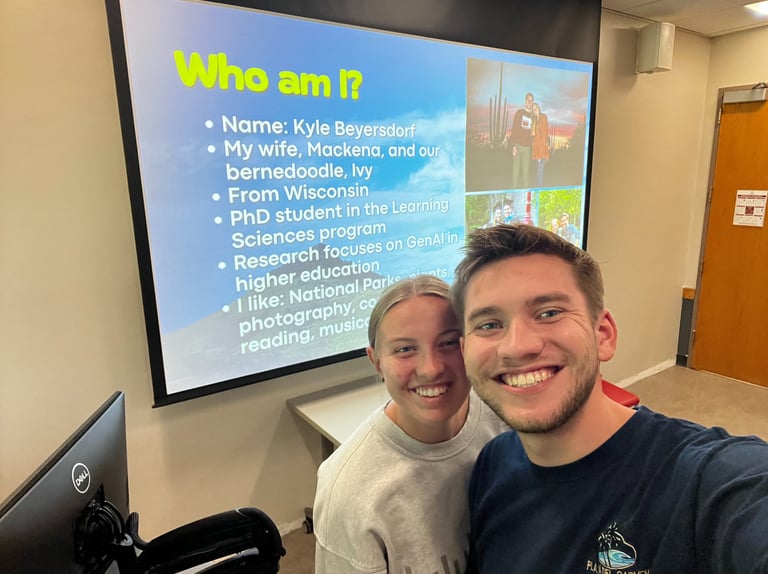
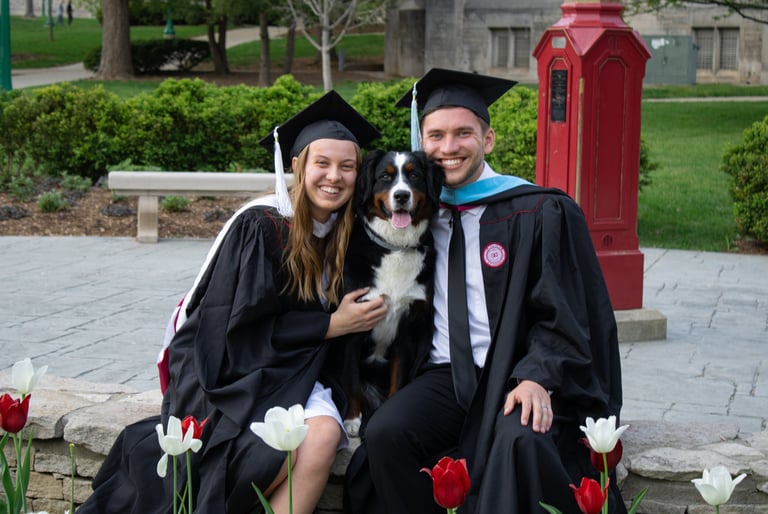
Mackena and me in my classroom the night before syllabus day!
IU graduation photos post-master's programs ('25).
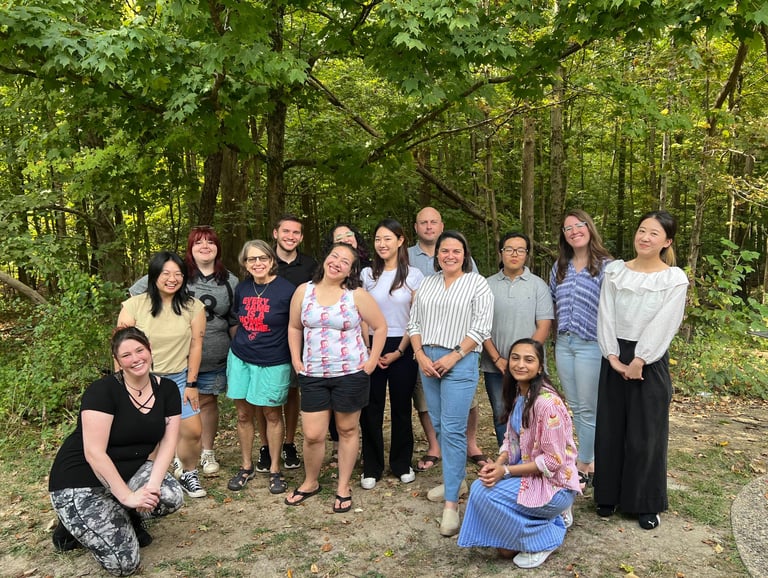
IU Learning Sciences program picnic ('25).
CONTACT ME
If you are interested in learning more about my work, experiences, or goals, I would welcome the opportunity to connect. I am also grateful for any opportunities you think may be a good fit, as well as any advice you would be willing to share.
You may also email me directly at kbeyersdorfgrad@gmail.com.